
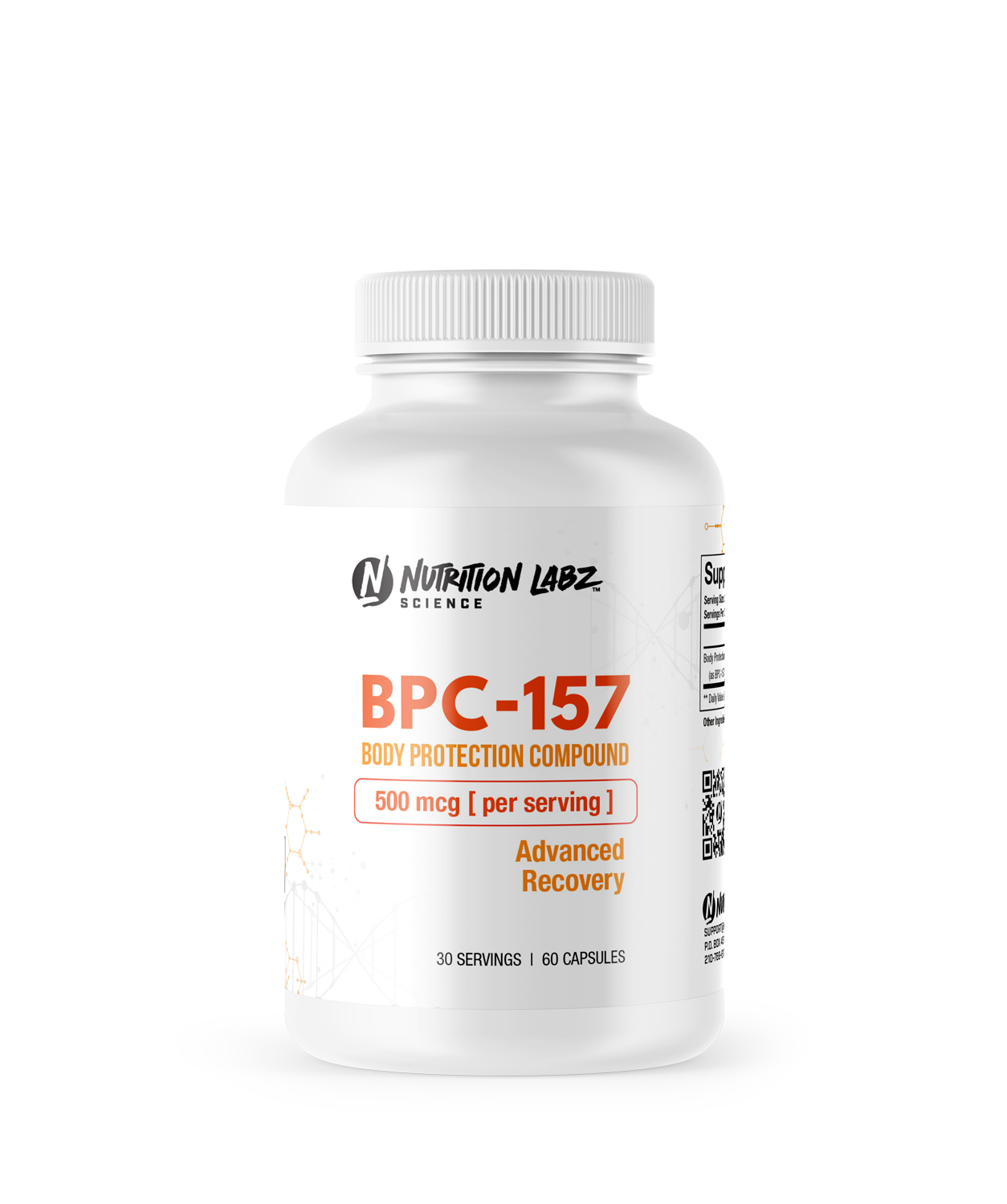
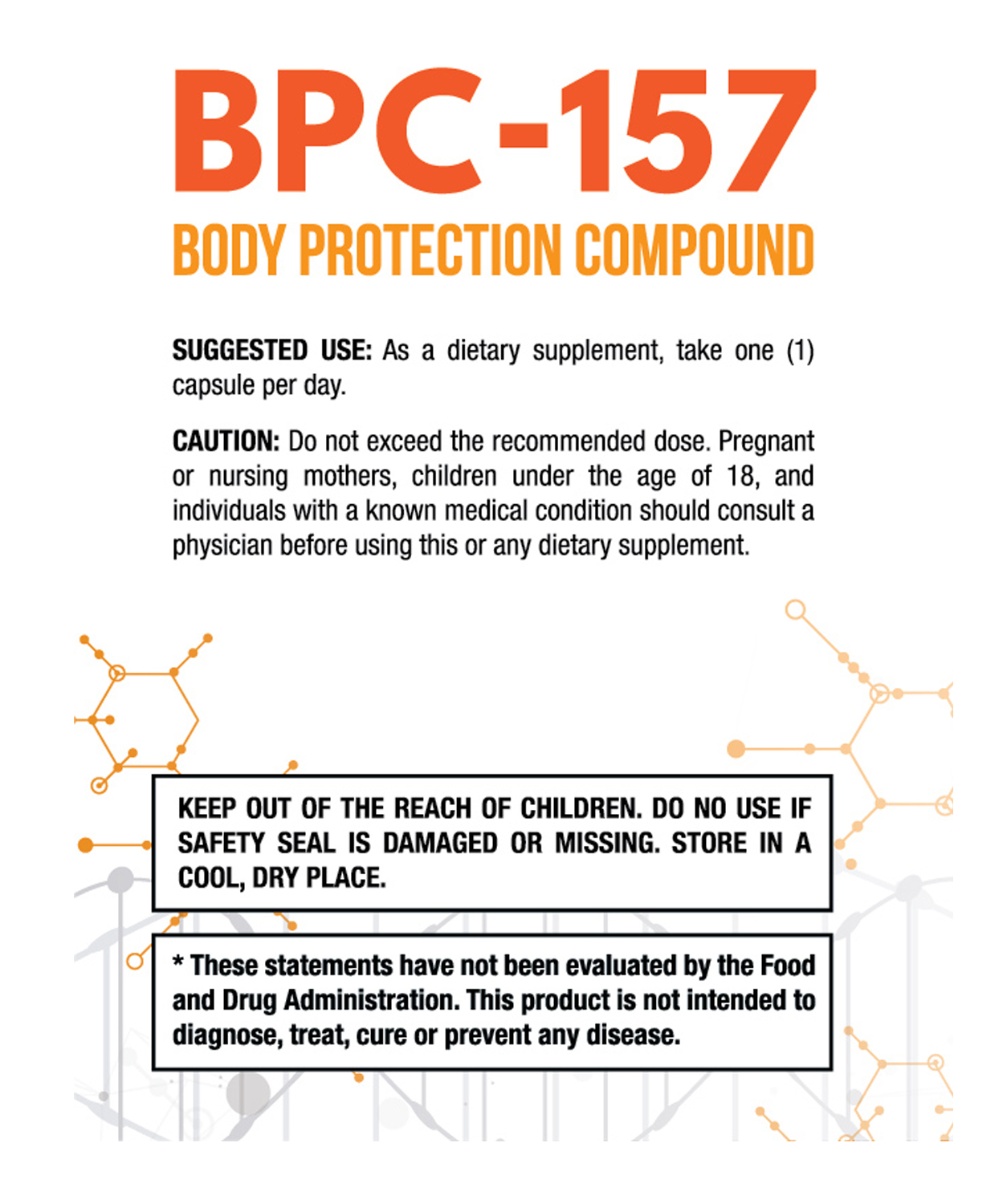
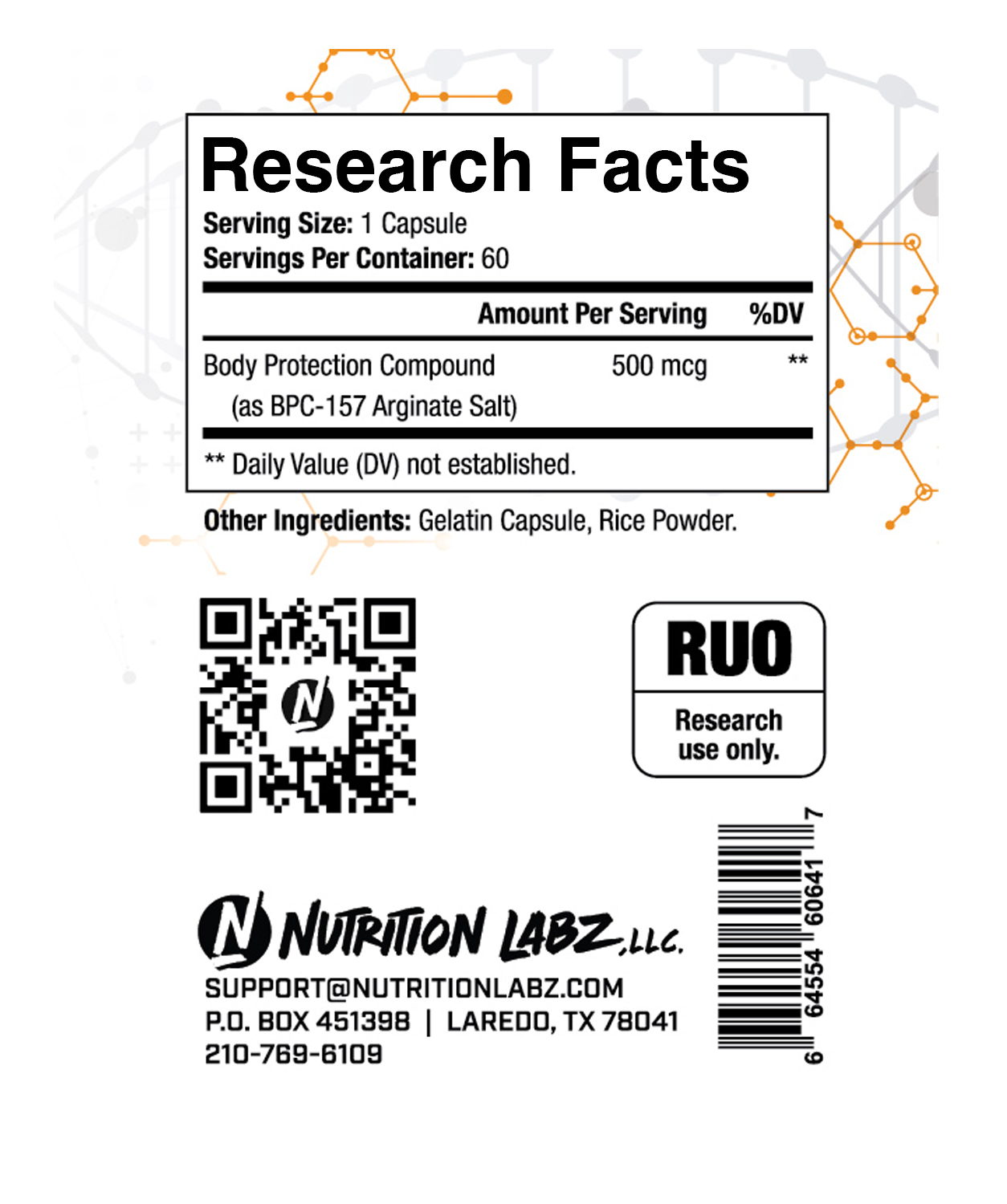
BPC-157 BODY PROTECTION COMPOUND (30 Capsules)
BPC-157 (Body Protection Compound-157) is a synthetic peptide derived from a protective protein found in human gastric juice. Comprised of 15 amino acids, it is widely studied for its regenerative, cytoprotective, and anti-inflammatory properties. BPC-157 has demonstrated the potential to accelerate tissue repair, promote angiogenesis, modulate inflammatory responses, and protect organs from damage. Despite its peptide nature, it remains stable in gastric conditions and is bioactive when taken orally or via injection. BPC-157 is currently being researched as a therapeutic candidate for soft tissue injuries, gastrointestinal healing, and neurological recovery.
$90.00
🚚 Free shipping on all orders (US Only )
🔄 All sales are final
FDA Disclaimer: The statements made within this website have not been evaluated by the US Food and Drug Administration. The statements and the products of this company are not intended to diagnose, treat, cure or prevent any disease. All products are for laboratory developmental research USE ONLY. Products are not for human consumption.
BPC-157 Overview
- Origin: Synthetic partial sequence of Body Protection Compound, originally isolated from human gastric juice.
- Molecular Formula: C62H98N16O22
- Molecular Weight: 1419 Da
- Peptide Type: Pentadecapeptide (15 amino acids)
- Route of Administration: Oral or injectable (subcutaneous/intramuscular)
- Status: Research chemical / Not FDA-approved / Under investigation in human clinical trials
Mechanisms of Action:
- Promotes angiogenesis via VEGF upregulation
- Modulates nitric oxide pathways for vascular protection
- Enhances collagen production and fibroblast activity
- Reduces pro-inflammatory cytokines and oxidative stress
- Protects GI mucosa, nerves, and vasculature from injury
- Stabilizes growth factor and neurotransmitter systems
BPC-157 Structure
- Sequence: Gly-Glu-Pro-Pro-Pro-Gly-Lys-Pro-Ala-Asp-Asp-Ala-Gly-Leu-Val
- Classification: Pentadecapeptide (15-mer)
- Solubility: Soluble in water and saline
- Stability: Stable in gastric juice and resistant to enzymatic degradation; bioactive after oral administration
This structural stability makes BPC-157 unique among therapeutic peptides, allowing for oral bioavailability in addition to injectable routes.
BPC-157 Research
Mechanism of Action
- Angiogenesis & Healing: BPC-157 upregulates VEGF and promotes endothelial repair and granulation tissue formation, speeding up healing in muscle, tendon, and GI tract tissues .
- NO System Modulation: It acts as a modulator of nitric oxide, balancing overproduction or deficiency, supporting vasodilation and microcirculation .
- Anti-inflammatory Effects: It suppresses pro-inflammatory cytokines while enhancing anti-inflammatory responses and scavenging free radicals .
- Growth Factor Synergy: BPC-157 enhances GH receptor expression and fibroblast response, suggesting synergy with growth hormone in tissue repair .
Human Clinical Studies
- Phase I Trial (NCT02637284): Oral BPC-157 was well tolerated up to 9 mg/day in healthy volunteers. No serious adverse effects were reported. BPC-157 was not detected in plasma or urine, suggesting rapid metabolism or tissue-specific action .
- Ulcerative Colitis Trials (Europe): Known by the drug name Bepecin (PL14736), BPC-157 was studied for GI mucosal healing in ulcerative colitis. It showed no toxicity and demonstrated mucosal protection in patients .
- Neuroprotective Investigations: BPC-157 has been employed in exploratory contexts like multiple sclerosis, indicating possible central nervous system protective effects .
Dosage (Experimental Use Only)
- Oral: 1 mg to 4 mg/day (in human trials)
- Injection: 250–500 µg per day, subcutaneously or intramuscularly (off-label protocols)
- Theoretical Effective Dose: ~200 µg/day extrapolated from animal studies
Note: These dosages are investigational and not FDA-approved. Always consult clinical guidance when referencing peptides.
Safety Profile
- No acute toxicity up to 2 g/kg in animal models (oral and IV)
- No adverse events in Phase I human trials
- Injection-site reactions are the most common issue when improperly diluted
- No known drug interactions, but long-term studies are pending
Referenced Citations
- Sikiric, P. et al. “Stable gastric pentadecapeptide BPC 157: antiulcer and cytoprotective activity in various models.” Regul Pept, 2001.
- Seiwerth, S. et al. “Stable gastric pentadecapeptide BPC 157 as a therapy for inflammatory bowel disease: Current insights and future perspectives.” Curr Pharm Des, 2018.
- Chang, C.H. et al. “BPC 157 Enhances GH Receptor Expression in Tendon Fibroblasts.” Biochem Biophys Res Commun, 2014.
- ClinicalTrials.gov, “Phase I Study of BPC-157 in Healthy Volunteers”, NCT02637284
- Bakalara, N. et al. “BPC-157: An overview of its therapeutic potential.” Peptides, 2020.
- Pavlov, K.H. et al. “BPC-157 and gastrointestinal healing.” WJGH, 2017.
- National Center for Biotechnology Information (NCBI): PubChem CID 9941957
- World Anti-Doping Agency (WADA) Prohibited List (BPC-157 listed as prohibited substance under S0)
- Apirajkamol, N. et al. “Peptide-based healing agents: BPC-157 in comparison with TB-500 and GHK-Cu.” Tissue Engineering Journal, 2021.