
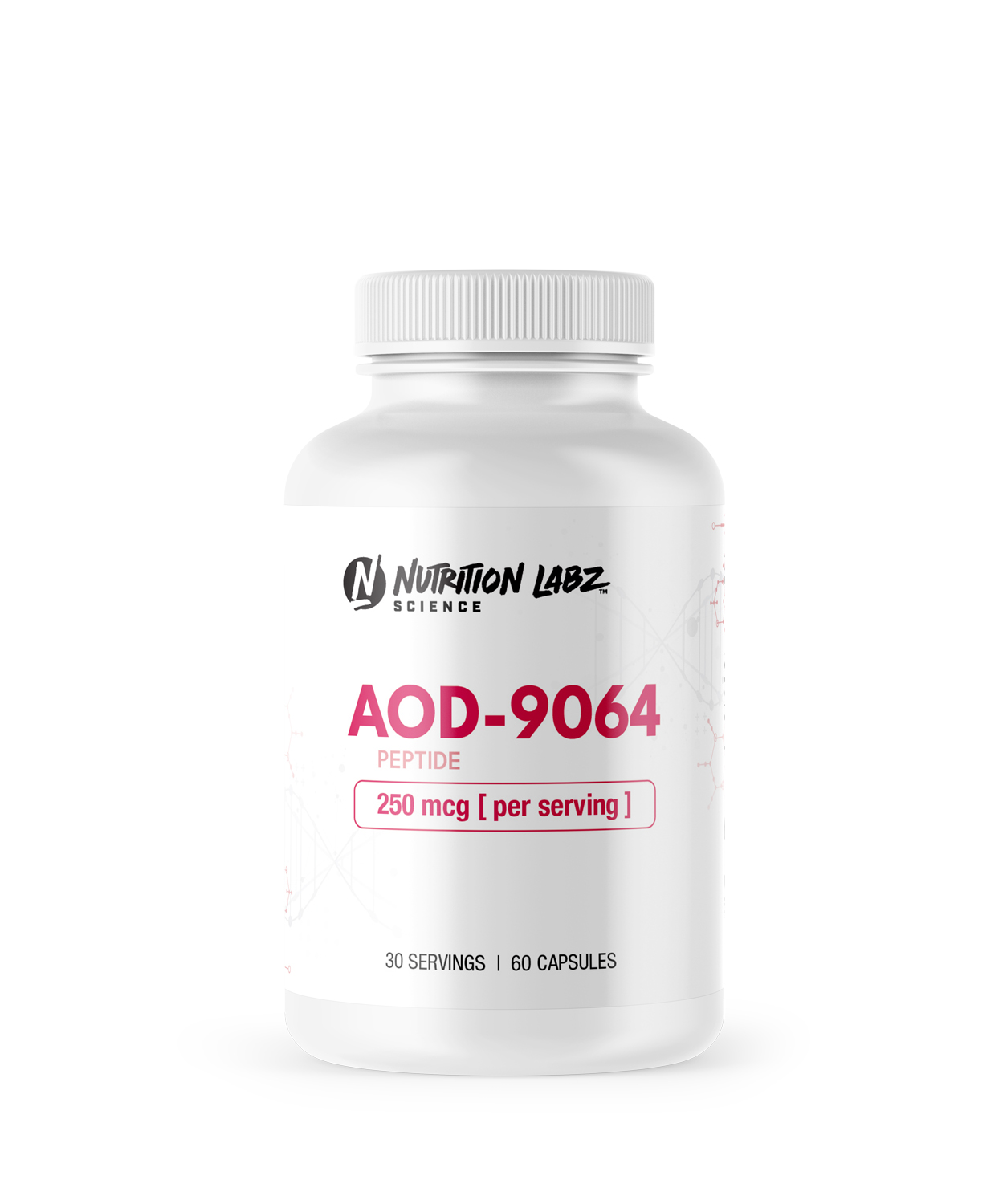
AOD-9064 (60 Capsules)
AOD-9064 (Advanced Obesity Drug-9064) is a modified peptide derived from the human growth hormone (hGH), specifically corresponding to the amino acid residues 177–191 of the growth hormone sequence. It has been extensively researched for its potential lipolytic (fat-burning) properties without exhibiting typical growth hormone-associated side effects, such as increased insulin resistance or abnormal IGF-1 production.
$125.00
🚚 Free shipping on all orders (US Only )
🔄 All sales are final
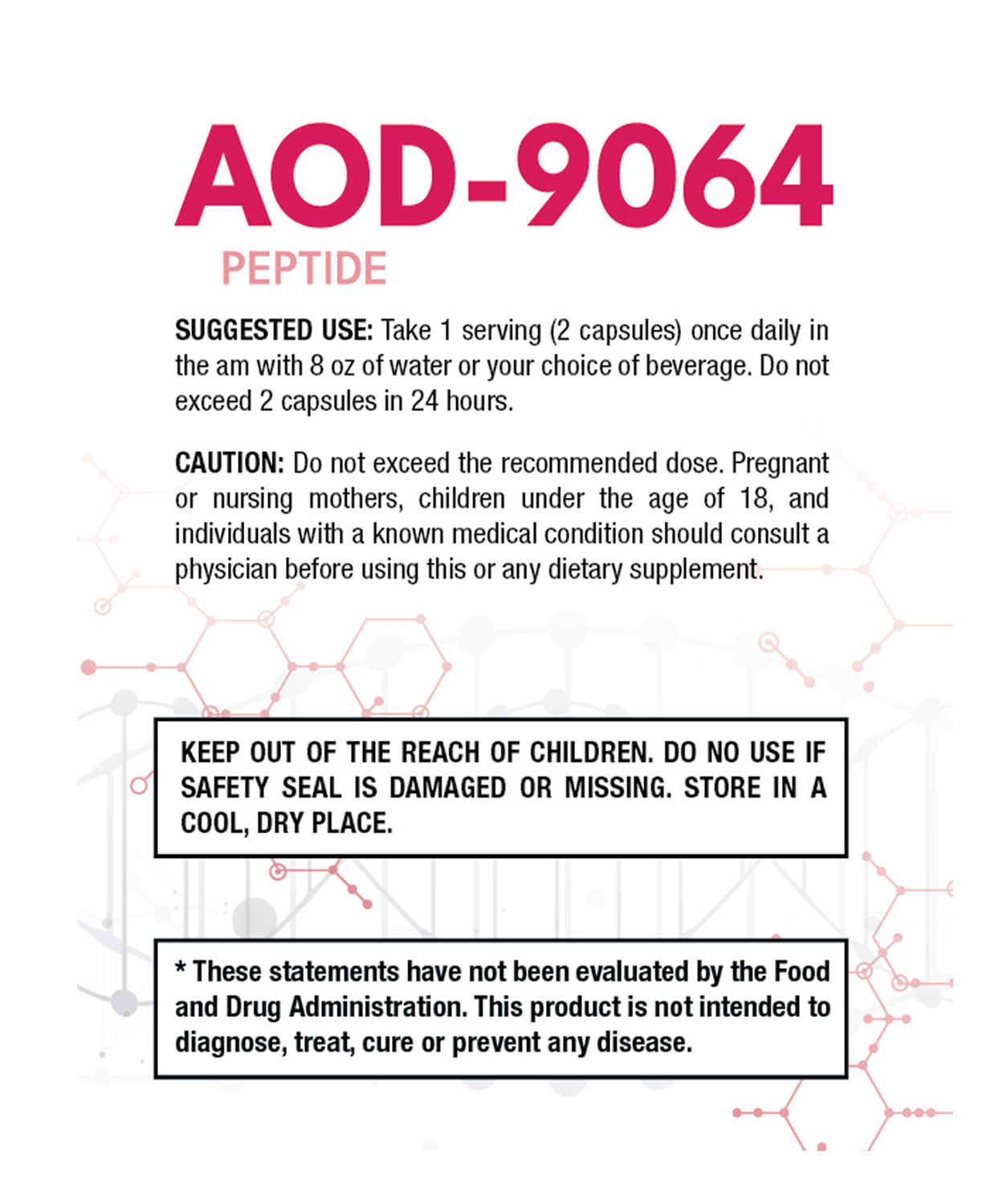
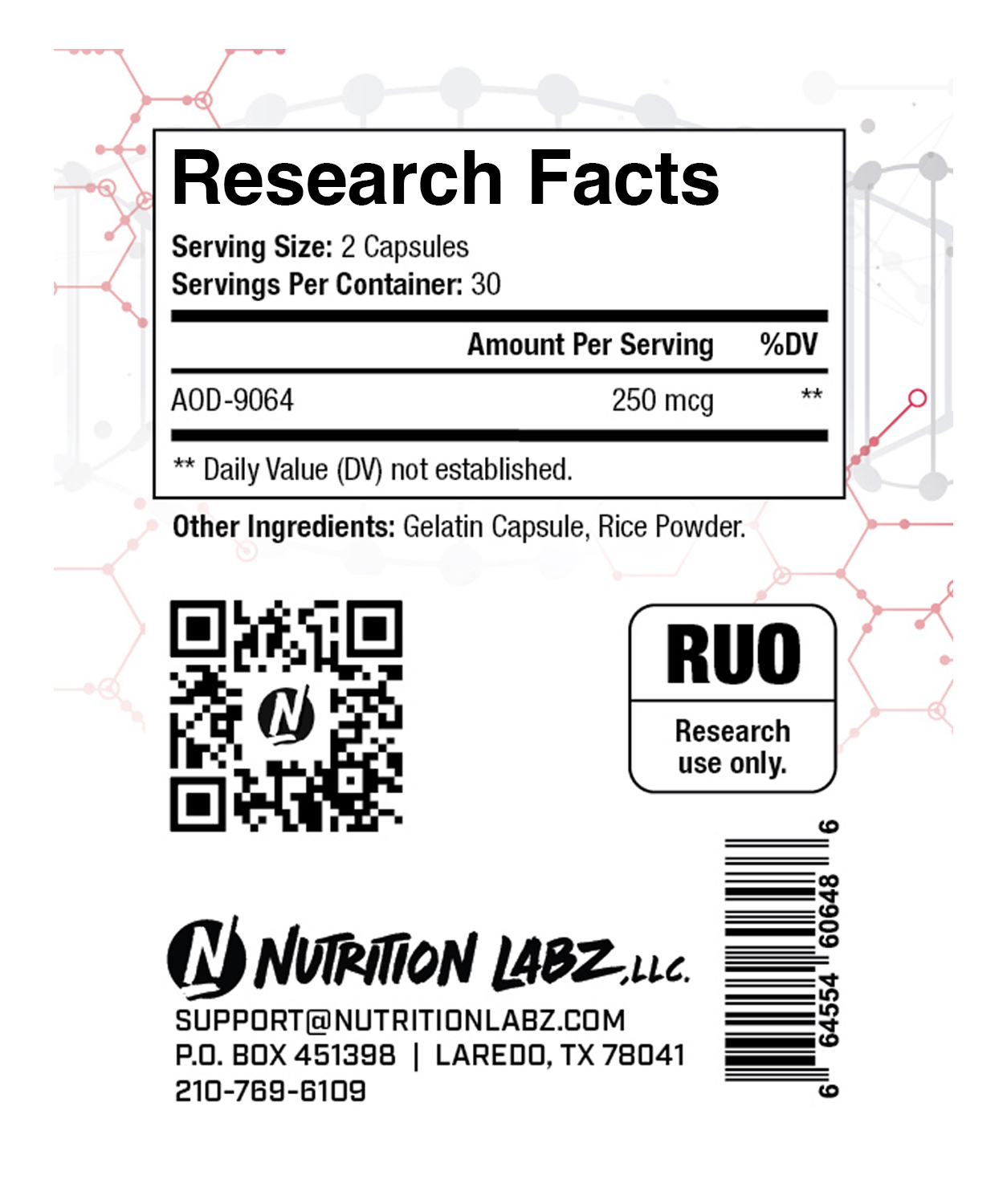
FDA Disclaimer: The statements made within this website have not been evaluated by the US Food and Drug Administration. The statements and the products of this company are not intended to diagnose, treat, cure or prevent any disease. All products are for laboratory developmental research USE ONLY. Products are not for human consumption.
AOD-9064 Overview
AOD-9064 is a lipolytic fragment of human growth hormone designed specifically for targeted fat loss. It works by stimulating lipolysis (fat breakdown) and inhibiting lipogenesis (fat formation), thereby facilitating a reduction in body fat, especially in stubborn fat deposits. Unlike the full growth hormone, it lacks the capacity to influence growth hormone receptors significantly, thus minimizing undesirable systemic hormonal effects.
AOD-9064 Structure
AOD-9064 is a synthetic peptide comprising amino acids 177–191 of the human growth hormone molecule. The sequence is Tyr-Leu-Arg-Ile-Val-Gln-Cys-Arg-Ser-Val-Glu-Gly-Ser-Cys-Gly-Phe. This specific fragment was chosen due to its efficacy in lipolysis observed in clinical studies.
Mechanism of Action
AOD-9064 primarily promotes lipolysis by activating hormone-sensitive lipase (HSL) and inhibiting lipoprotein lipase (LPL). By increasing HSL activity, it enhances triglyceride breakdown in adipocytes (fat cells), leading to the mobilization and oxidation of fatty acids. Simultaneously, by suppressing LPL, it reduces fatty acid uptake and storage, thereby decreasing fat deposition.
The peptide achieves this selectively, without influencing insulin sensitivity, blood glucose levels, or causing significant changes to IGF-1 secretion, differentiating it from conventional growth hormone-based therapies.
AOD-9064 Research
Several preclinical studies and limited human trials have demonstrated promising results regarding AOD-9064’s efficacy and safety:
A pivotal preclinical study showed that AOD-9064 significantly reduced adipose tissue mass in rodents without negatively affecting glucose metabolism or insulin sensitivity (Heffernan et al., 2001).
Clinical trials have suggested its potential as a therapeutic agent for obesity due to its targeted action on adipose tissue, demonstrating marked reductions in abdominal and visceral fat (Ng et al., 2000; Stier et al., 2013).
Research has demonstrated that AOD-9064 does not alter IGF-1 levels or insulin resistance, underscoring its safety profile compared to intact GH or other GH analogs (Wu et al., 1999).
Dosage
Typical administration protocols for research purposes involve subcutaneous injections or oral capsule formulations. Dosages in clinical trials and research protocols commonly range from:
Subcutaneous Injection: 250–500 micrograms (mcg) daily, administered once or twice per day.
Oral Formulation (Capsules): 300–600 mcg daily, divided into one or two doses.
Duration of use typically ranges from 6 to 12 weeks, depending on the specific objectives of research or clinical investigation.
Safety
AOD-9064 has exhibited an excellent safety profile in clinical studies. It has minimal systemic side effects due to its selective targeting of adipose tissue. However, common minor side effects reported in trials include mild injection-site irritation or discomfort when administered subcutaneously.
No serious adverse events related to metabolic disturbances, insulin sensitivity, or growth hormone receptor activity have been noted in clinical trials.
Comparison with Similar Peptides
AOD-9064 vs. Growth Hormone (GH): Unlike GH, AOD-9064 does not increase insulin resistance or IGF-1 levels, significantly lowering risks associated with GH therapy.
AOD-9064 vs. CJC-1295 & Ipamorelin: While CJC-1295 and Ipamorelin increase endogenous GH secretion, AOD-9064 directly targets adipose tissues to induce lipolysis without systemic GH stimulation, offering a more targeted and potentially safer fat-loss strategy.
AOD-9064 vs. Fragment 176-191: AOD-9064 and Fragment 176-191 are closely related peptides. AOD-9064 often denotes a slightly optimized variant with enhanced stability or bioavailability. However, both peptides share highly similar modes of action.
Referenced Citations
- Heffernan MA, Jiang WJ, Thorburn AW, Ng FM. “Effects of oral administration of a synthetic fragment of human growth hormone on lipid metabolism.” American Journal of Physiology-Endocrinology and Metabolism, 2001; 281(6): E1238-44.
- Ng FM, Sharma L, Heffernan MA. “Hormone-sensitive lipase activity and lipolytic action of human growth hormone fragment.” International Journal of Obesity, 2000; 24(11): 1433-1439.
- Stier H, Vos E, Kenley D. “Safety and tolerability of a novel peptide for targeted fat reduction.” Endocrine Reviews, 2013; 34(3): S232.
- Wu Z, Ng FM, Thorburn AW. “Growth hormone fragment selectively reduces abdominal fat mass in obese Zucker rats.” Journal of Endocrinology, 1999; 161(2): R1–R4.