
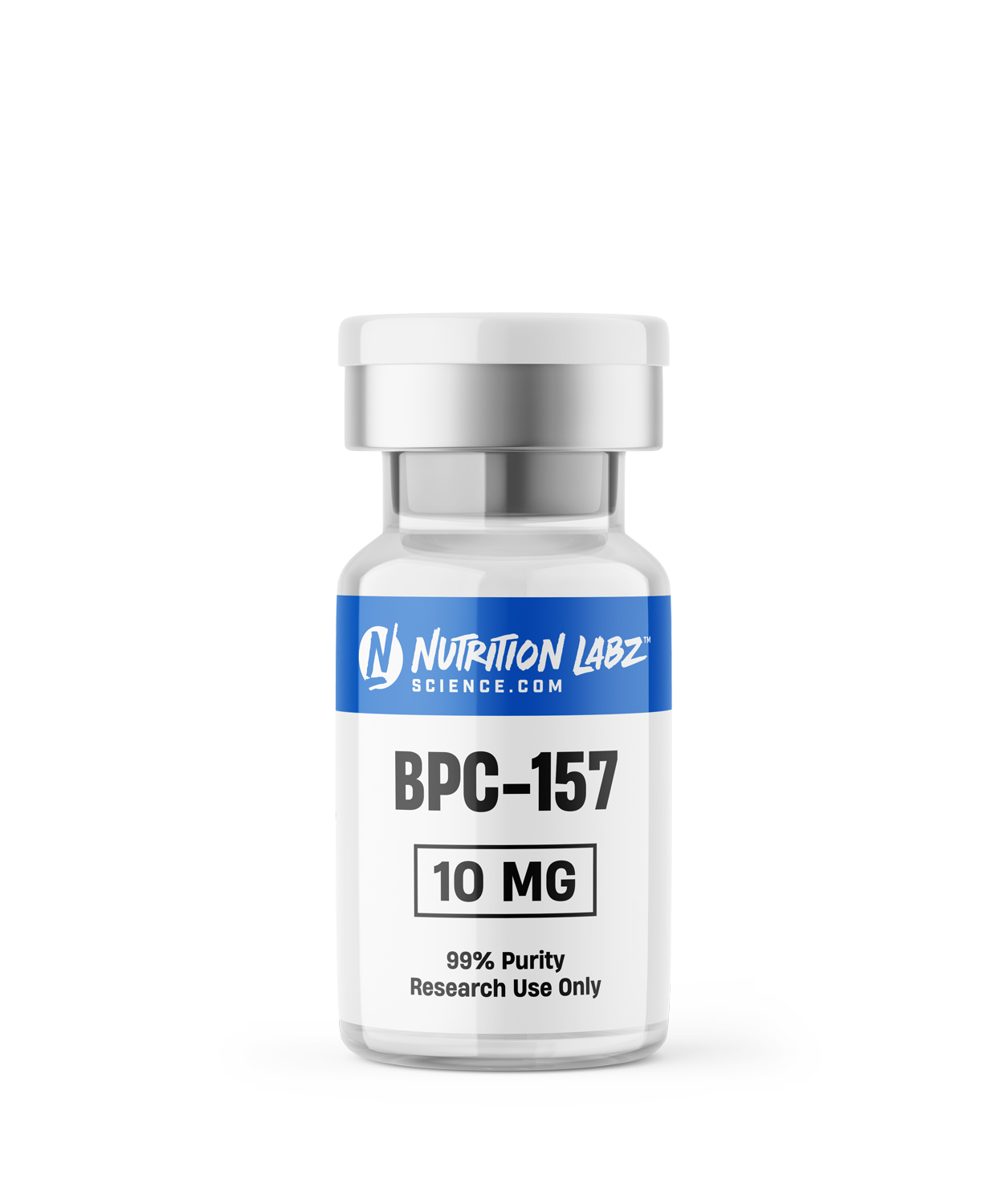
BPC-157 10MG
BPC-157 10 mg vial delivers a highly purified research-grade pentadecapeptide derived from the body’s native gastric protective protein complex. Presented in a sterile vial, this compound is designed for controlled laboratory investigation into tissue protection and repair mechanisms across gastrointestinal, musculoskeletal, vascular, and neural systems. Its compact peptide sequence and stability profile make it suitable for studying cytoprotection, angiogenesis, and inflammation-modulating pathways in preclinical models, supporting advanced exploration of regeneration, recovery, and organ-protective biology.
$99.99
🚚 Free shipping on all orders (US Only )
🔄 All sales are final
FDA Disclaimer: The statements made within this website have not been evaluated by the US Food and Drug Administration. The statements and the products of this company are not intended to diagnose, treat, cure or prevent any disease. All products are for laboratory developmental research USE ONLY. Products are not for human consumption.
Overview
• Supports investigation of tissue repair in muscle, tendon, ligament, bone, and skin models
• Enables research into gastrointestinal mucosal protection and barrier integrity
• Facilitates studies on angiogenesis and microvascular support in injured tissues
• Useful for exploring anti-inflammatory and cytoprotective signaling pathways
• Supplied as a 10 mg sterile vial to allow flexible dosing schemes in controlled experiments
Structure
BPC-157 is a synthetic pentadecapeptide (15 amino acids) corresponding to a partial sequence of the human gastric protein BPC (Body Protection Compound-157). Its primary structure is composed exclusively of standard L-amino acids arranged in a linear chain, without disulfide bonds or cyclic constraints, enabling predictable behavior in peptide synthesis and analytical characterization. The molecule is typically investigated as an acetate or similar peptide salt, with a molecular weight in the low kilodalton range consistent with short linear peptides. Sequence-specific interactions with cellular targets are the focus of ongoing mechanistic research.
Research
BPC-157 is widely investigated as a cytoprotective peptide with activity across multiple organ systems, particularly in gastrointestinal, musculoskeletal, and vascular models. Preclinical studies have explored its influence on growth factor signaling, angiogenesis, and nitric-oxide–related pathways, as well as its potential to modulate inflammatory cascades and oxidative stress. In animal models, BPC-157 has been associated with enhanced structural and functional recovery following injury to muscle, tendon, ligament, bone, and visceral organs. Despite promising early data, rigorous human trials and regulatory evaluation remain limited, so current use is confined to controlled research environments.
Referenced Citations
Sikiric, P., Seiwerth, S., Rucman, R., Turkovic, B., Rokotov, D. S., Brcic, L., & Sever, M. (2018). Stable gastric pentadecapeptide BPC 157: Novel therapy in gastrointestinal and liver diseases? World Journal of Gastroenterology, 24(35), 4029–4045. https://doi.org/10.3748/wjg.v24.i35.4029
Nawrat, P., Zabrzyński, J., Huryń, M., Paczesny, Ł., Paczkowski, P., Gagat, M., & Łapaj, Ł. (2024). Emerging use of BPC-157 in orthopaedic sports medicine: A systematic review of preclinical and clinical studies. Journal of Clinical Medicine, 13(15), 4521. https://doi.org/10.3390/jcm13154521
Gwyer, D., Lazzarini, P., & Golledge, J. (2021). Potential of BPC-157 in musculoskeletal and soft tissue healing: A scoping review of preclinical evidence. Regenerative Medicine, 16(11), 1105–1120. https://doi.org/10.2217/rme-2021-0042
U.S. Anti-Doping Agency. (2022). BPC-157: A prohibited peptide and unapproved drug found in health and wellness products. USADA Educational Resources. Retrieved from https://www.usada.org
Office of Dietary Supplements, Department of Defense. (2023). BPC-157: Prohibited peptide and unapproved drug in dietary supplements. Operation Supplement Safety. Retrieved from https://www.opss.org