
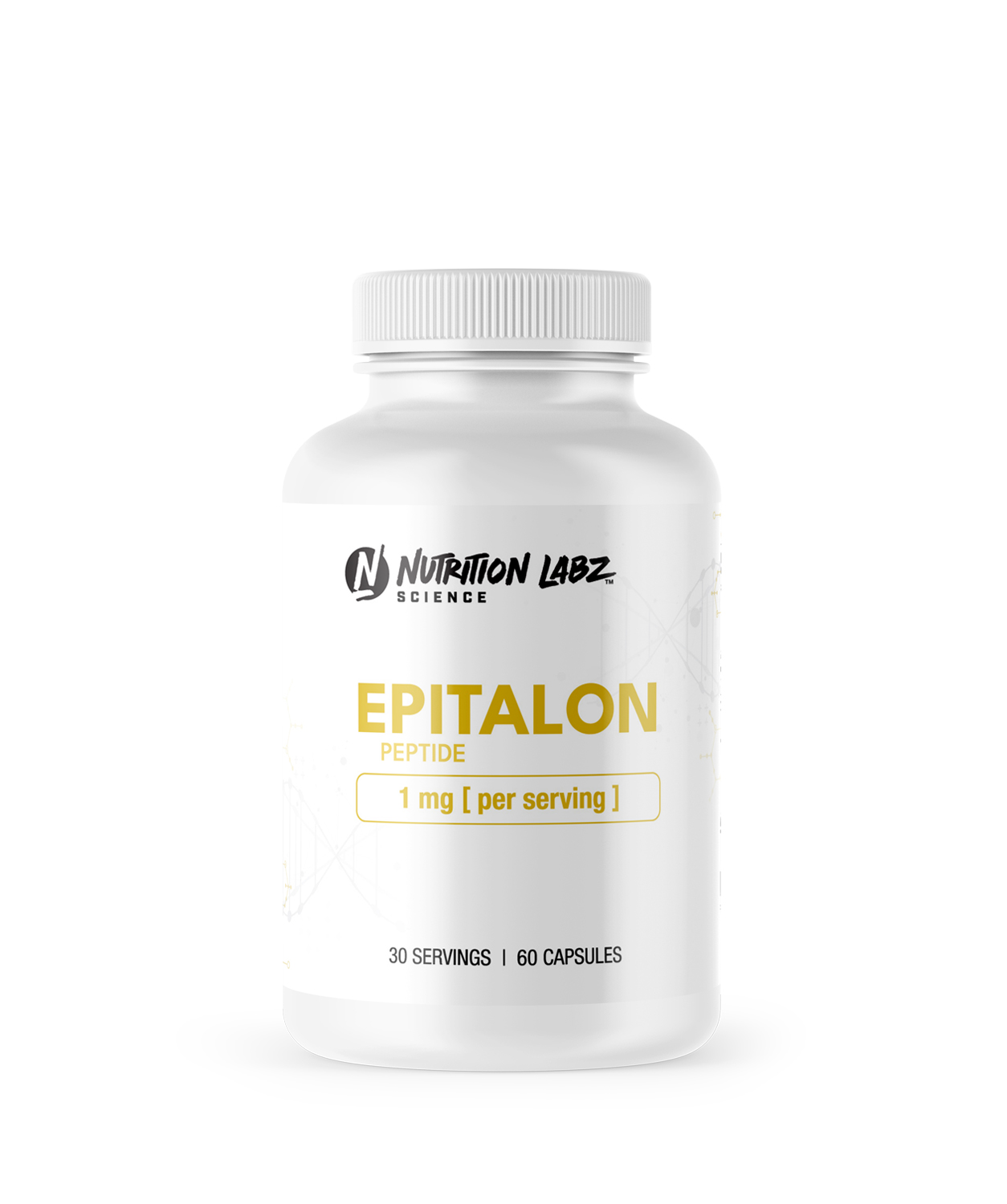
Epitalon Peptide
Epitalon is a synthetic research peptide modeled after the naturally occurring pineal extract Epithalamin. With the sequence Ala-Glu-Asp-Gly, Epitalon has become a subject of growing interest in scientific communities for its potential roles in cellular aging pathways, telomerase activity, and circadian rhythm regulation — all within controlled research environments.
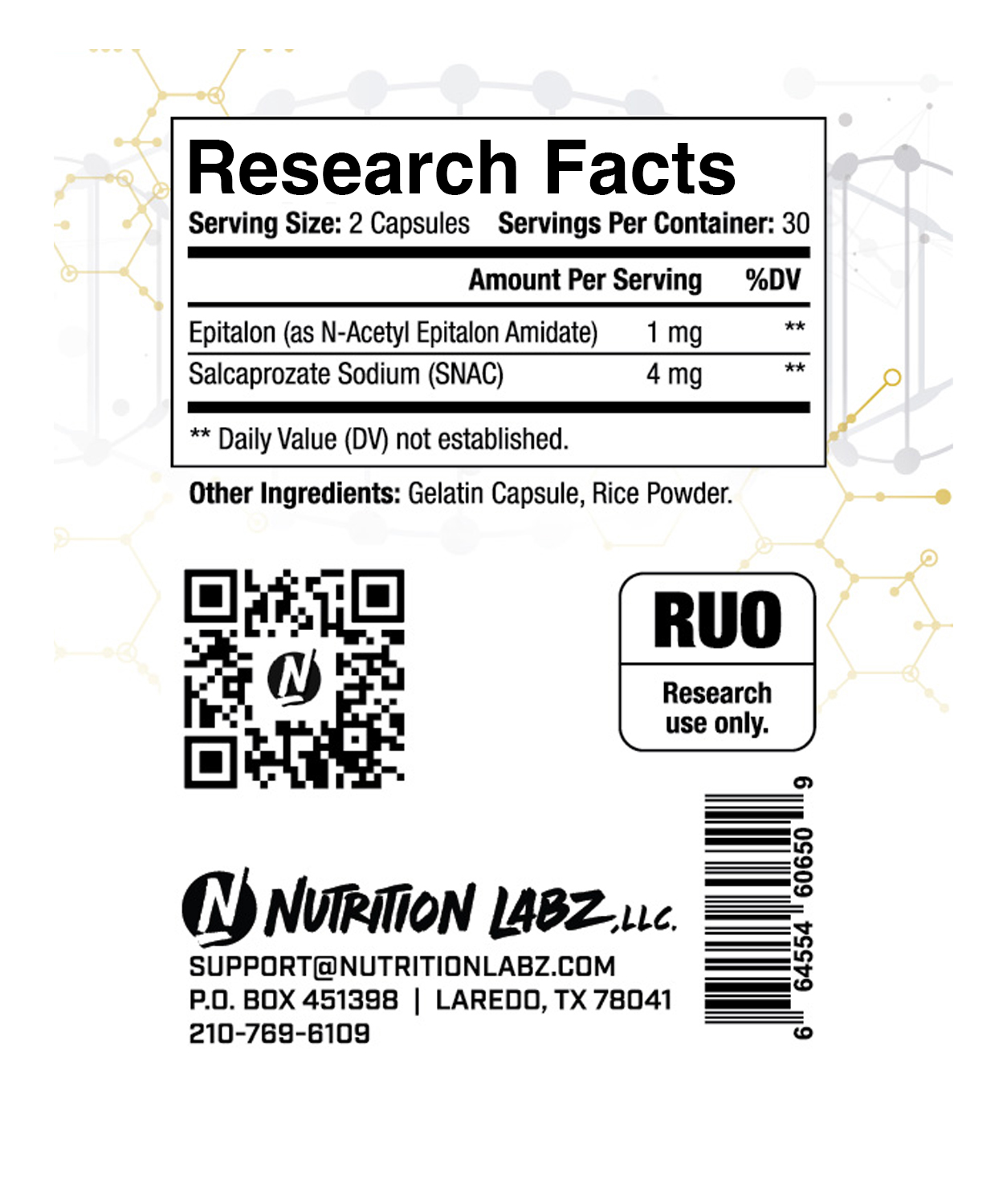
Each serving contains 1 mg of Epitalon, combined with 4 mg of SNAC (salcaprozate sodium) as a research excipient. Designed for reliable purity, precise dosing, and convenient handling, Epitalon from Nutrition Labz Science is ideal for laboratories seeking consistent results in peptide research.
For Laboratory Research Use Only. Not for human consumption.
$90.00
🚚 Free shipping on all orders (US Only )
🔄 All sales are final
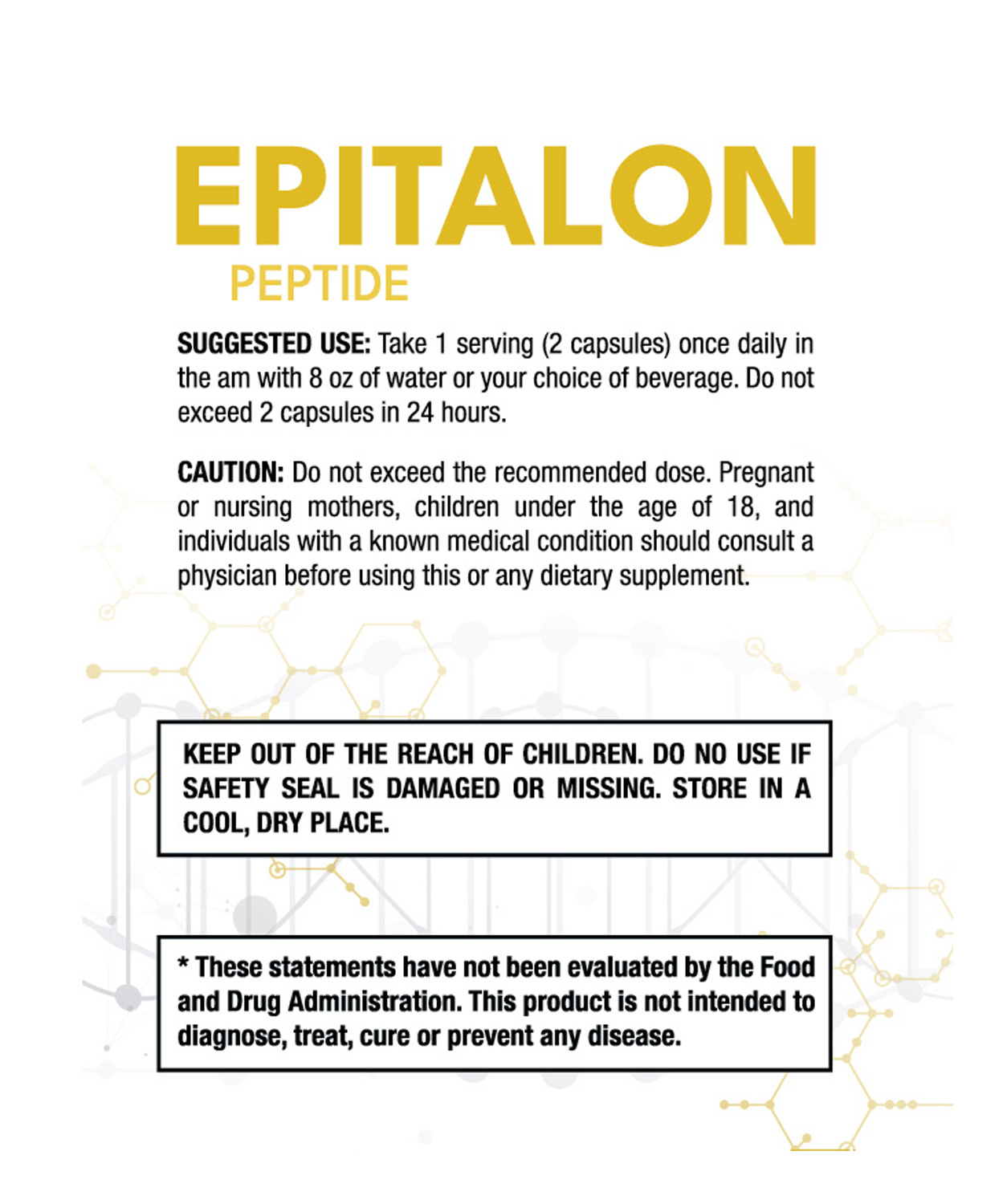
FDA Disclaimer: The statements made within this website have not been evaluated by the US Food and Drug Administration. The statements and the products of this company are not intended to diagnose, treat, cure or prevent any disease. All products are for laboratory developmental research USE ONLY. Products are not for human consumption.
Overview
Research interest in Epitalon centers on three areas.
- Cellular aging mechanisms
Epitalon has been reported to induce telomerase activity and lengthen telomeres in human somatic cells in vitro. Follow‑up work suggested increased proliferative potential in cultured fetal fibroblasts. These findings are lab‑based and have not been established as clinical outcomes. - Pineal and circadian biology
Epitalon and pineal peptides are studied as modulators of melatonin rhythms and circadian signaling in aging models. Reports include normalization of daily melatonin patterns in elderly subjects and in old primates, plus protection of dopamine circadian rhythms in experimental settings. Evidence remains mixed and is largely from small or regional studies. - Stress, redox, and tissue models
Recent in vitro papers describe antioxidant and wound‑healing supportive effects in stressed retinal cell lines, which researchers attribute to changes in EMT and fibrosis‑related signaling. These are cell data, not clinical data.
Regulatory note
Epitalon is not FDA approved for any indication. Nutrition Labz Science supplies this compound for research use only.
Structure
- Peptide sequence, Ala‑Glu‑Asp‑Gly
- Synonyms, Epitalon, Epithalon, Epithalone
- CAS, 307297‑39‑8
- Molecular formula, C14H22N4O9
- Molecular weight, ~390.35 g/mol
- Common salt forms, trifluoroacetate or acetate, supplied as a lyophilized solid for laboratory use
These identifiers and properties are consistent with PubChem and other chemical registries.
Research
Proposed mechanisms to investigate
- Telomerase pathway modulation and telomere maintenance in cultured human cells. PubMedKarger
- Pineal–hypothalamic signaling, melatonin synthesis, and circadian gene expression with aging. Alzheimer’s Drug Discovery FoundationPubMed
- Antioxidant responses, cellular stress resistance, and wound‑healing behaviors in retinal cell models. SpringerLink
In vitro
- Human somatic cells, epitalon induced expression of the telomerase catalytic subunit, increased telomerase activity, and resulted in measurable telomere elongation. PubMed
- Human fetal fibroblasts, cultures exhibited extended proliferative lifespan after exposure. PubMed
Animal and ex vivo models
-
Aged primates, pineal peptides including Epitalon have been reported to correct age‑related endocrine disturbances, with emphasis on melatonin rhythms. ScienceDirect
Human data, exploratory and limited
-
Small studies and research briefs report modulation of night melatonin levels and circadian patterns in elderly subjects, though methods and sample sizes vary. Findings should be considered preliminary. Alzheimer’s Drug Discovery Foundation
Handling, solubility, and stability references
- Epitalon TFA salt, soluble in PBS and common organics at low mg/ml ranges, do not store aqueous stocks for more than about a day. cdn.caymanchem.com
- General peptide handling, store lyophilized materials at −20 °C or colder, protect from light and moisture, aliquot solutions to avoid freeze‑thaw. MilliporeSigma+1
Important
All findings above describe research contexts. No therapeutic claims are made. This product is sold for laboratory research only.
Referenced Citations
- PubChem Compound Summary, “Epitalon, C14H22N4O9, CAS 307297‑39‑8.” Properties and identifiers. PubChem
- NLM GSRS, “EPITALON,” synonyms and registry information. GSRS
- Khavinson VK, Bondarev IE, Butyugov AA. “Epithalon peptide induces telomerase activity and telomere elongation in human somatic cells.” Bull Exp Biol Med. 2003. PubMed
- Khavinson VK, et al. “Peptide promotes overcoming of the division limit in human fetal fibroblasts.” Bull Exp Biol Med. 2004. PubMed
- Goncharova ND, et al. “Pineal peptides restore age‑related disturbances in reproductive function of old monkeys.” Mech Ageing Dev. 2005. ScienceDirect
- Alzheimer’s Drug Discovery Foundation, Cognitive Vitality Researcher Brief, “Epithalamin and Epithalon.” Summary of human melatonin and circadian findings. Alzheimer’s Drug Discovery Foundation
- Arutjunyan A, et al. “Melatonin and pineal gland peptides are able to correct the circadian rhythm of dopamine metabolite.” Curr Aging Sci. 2012. PubMedIngenta Connect
- Araj SK, et al. “Overview of Epitalon, highly bioactive pineal tetrapeptide.” Review article. 2025. PMC
- Gatta M, et al. “The antioxidant tetrapeptide Epitalon enhances delayed wound healing in hyperglycemia‑injured ARPE‑19 cells.” Cell Transplantation. 2025. SpringerLink
- Cayman Chemical, “Epitalon (trifluoroacetate) Product Information,” solubility and storage notes. cdn.caymanchem.com
- Sigma‑Aldrich, “Storage and Handling of Synthetic Peptides, Guidelines.” General peptide handling and storage. MilliporeSigma