
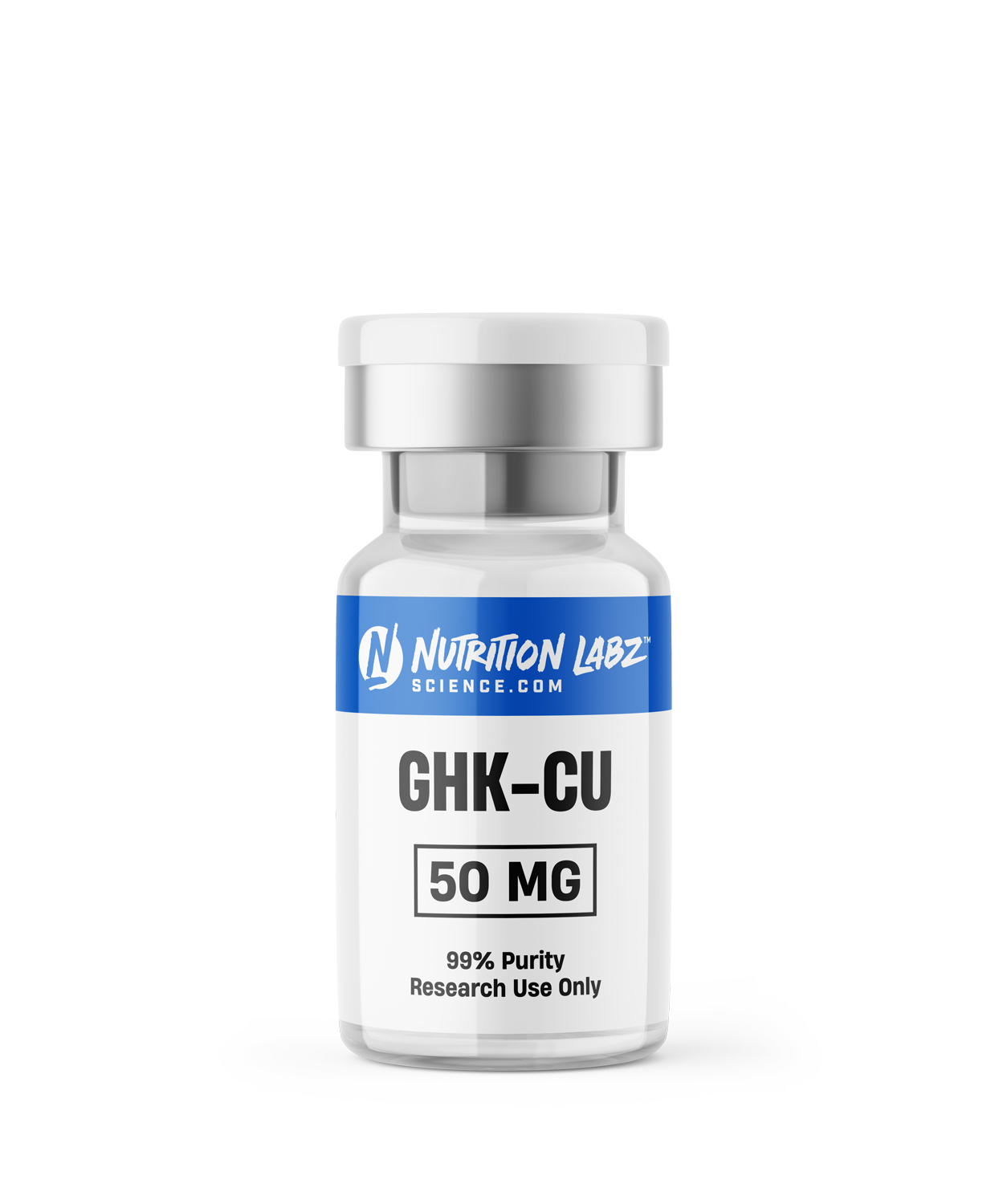
GHK-CU 50MG
GHK-CU 50MG Vial delivers a high-purity preparation of the well-characterized copper tripeptide GHK-Cu (glycyl-L-histidyl-L-lysine–copper). Naturally occurring in human plasma, saliva, and urine, this peptide–metal complex is widely used in advanced research models exploring tissue regeneration, extracellular matrix remodeling, and oxidative balance. Presented as a stabilized vial format, GHK-CU 50MG is designed for controlled, reproducible in vitro and in vivo laboratory applications where precise dosing, structural consistency, and robust copper chelation are critical to study design.
$62.49
🚚 Free shipping on all orders (US Only )
🔄 All sales are final
FDA Disclaimer: The statements made within this website have not been evaluated by the US Food and Drug Administration. The statements and the products of this company are not intended to diagnose, treat, cure or prevent any disease. All products are for laboratory developmental research USE ONLY. Products are not for human consumption.
Overview
– Naturally occurring **glycyl-L-histidyl-L-lysine–copper (GHK-Cu)** tripeptide complex
– Investigated in models of **wound repair**, **tissue remodeling**, and **skin biology**
– Explored for effects on **collagen and elastin** dynamics and extracellular matrix support
– Studied for **antioxidant** and **metal-chelating** properties relevant to oxidative stress
– Supplied as a **50 mg vial** to support accurate dosing in research protocols
Structure
GHK-Cu is a **copper(II) complex** of the tripeptide **glycyl-L-histidyl-L-lysine**. The linear peptide sequence (Gly–His–Lys) provides nitrogen donor atoms from the histidine imidazole ring and peptide backbone that coordinate a divalent copper ion in a square-planar or distorted square-pyramidal geometry. This coordination environment confers high affinity for Cu(II) and stabilizes the complex in aqueous systems, enabling GHK-Cu to function as a biologically relevant low–molecular weight copper carrier. The peptide moiety has the empirical formula C₁₄H₂₄N₆O₄, which, together with Cu(II), forms the GHK-Cu complex.
Research
GHK-Cu is widely studied as a low–molecular weight copper carrier implicated in tissue repair, extracellular matrix modulation, and cellular stress responses. In experimental systems, the complex has been associated with regulation of collagen and glycosaminoglycan turnover, fibroblast and endothelial cell behavior, and angiogenic signaling. Its copper-binding capacity and redox activity underpin interest in oxidative balance and cytoprotective pathways. Ongoing research leverages GHK-Cu to probe gene-expression programs, inflammatory mediators, and matrix-remodeling cascades within skin, connective tissue, and neurobiological models.
Referenced Citations
Pickart, L., & Margolina, A. (2018). Regenerative and protective actions of the GHK-Cu peptide in the light of the new gene data. *International Journal of Molecular Sciences, 19*(7), 1987. https://doi.org/10.3390/ijms19071987
Pickart, L. (2008). The human tri-peptide GHK and tissue remodeling. *Journal of Biomaterials Science, Polymer Edition, 19*(8), 969–988. https://doi.org/10.1163/156856208784909435
McCormack, J. P., & Weaver, D. F. (2015). Bioactive copper complexes in neurobiology and medicine. *Chemical Reviews, 115*(21), 11647–11679. https://doi.org/10.1021/cr500529v
Pickart, L., & Thaler, M. M. (1973). Tripeptide in human serum which prolongs survival of normal liver cells and stimulates growth in neoplastic liver. *Nature, 243*(5400), 85–87. https://doi.org/10.1038/243085a0