
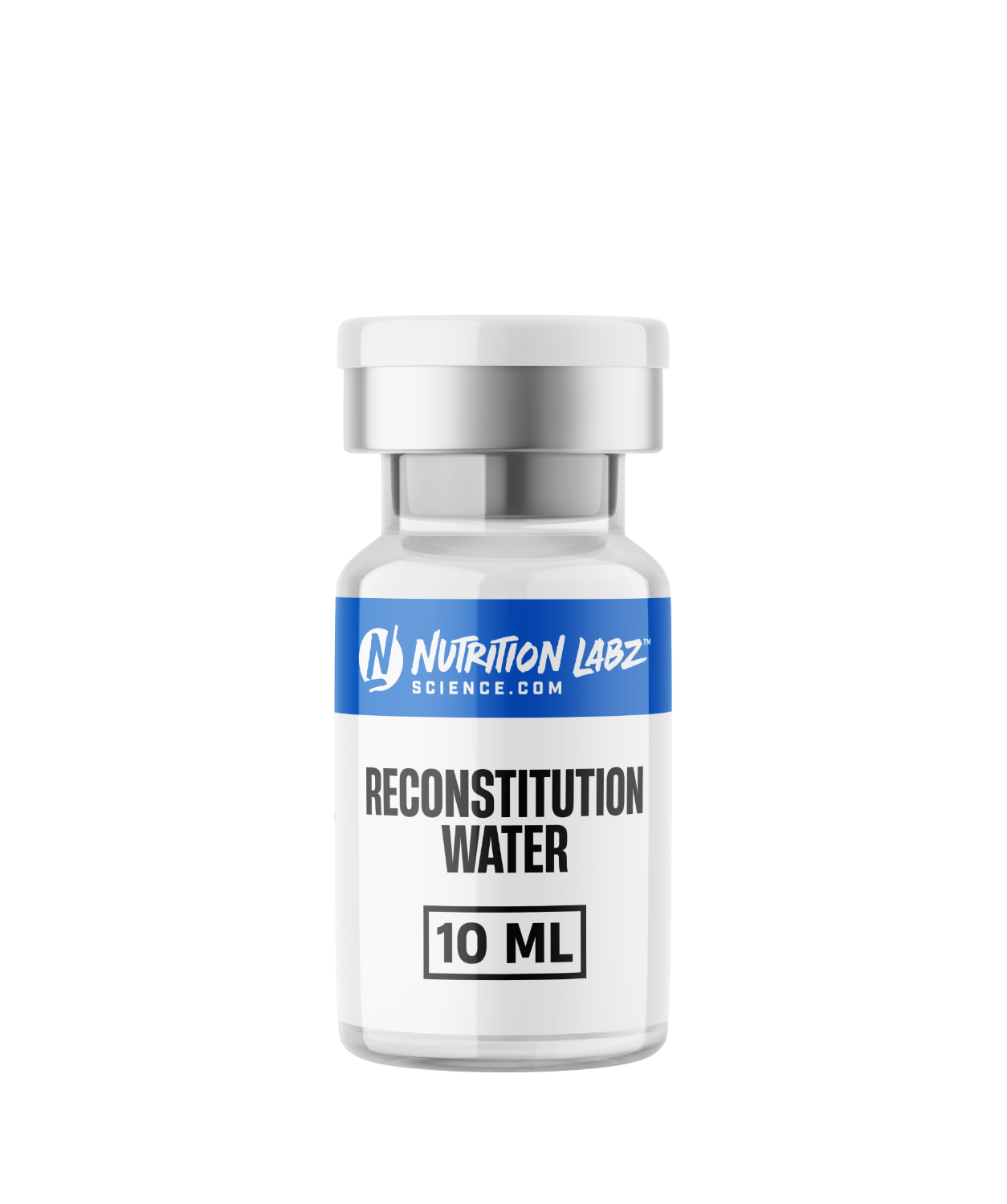
Reconstitution Water 10ML
Reconstitution Water 10ML is a sterile, non-buffered aqueous solution presented in a clear lab-grade vial, designed specifically for the reconstitution and dilution of compatible lyophilized laboratory reagents. Manufactured for consistent clarity and handling, this 10 mL format supports precise volumetric control across a wide range of bench workflows. The robust vial presentation facilitates easy visualization, secure sampling, and dependable storage within controlled environments, helping laboratories maintain reliable, repeatable preparation of reconstituted materials without introducing additional formulation variables.
$14.99
🚚 Free shipping on all orders (US Only )
🔄 All sales are final
FDA Disclaimer: The statements made within this website have not been evaluated by the US Food and Drug Administration. The statements and the products of this company are not intended to diagnose, treat, cure or prevent any disease. All products are for laboratory developmental research USE ONLY. Products are not for human consumption.
Overview
– Sterile aqueous solution supplied in a 10 mL lab-grade vial for routine reconstitution steps
– Clear, easy-to-visualize matrix to support accurate volumetric handling and inspection
– Convenient vial format compatible with standard benchtop and cold-storage workflows
– Designed to minimize extraneous formulation variables during reagent preparation
– Supports consistent reconstitution of compatible lyophilized materials in research settings
Structure
Reconstitution Water 10ML consists of highly purified water suitable for laboratory use, without added buffers, excipients, or active pharmaceutical ingredients. At the molecular level, the solution is composed of H₂O molecules forming a dynamic hydrogen-bonded network, with transient clusters arising from intermolecular hydrogen bonding between individual water molecules. This network underpins the characteristic physicochemical properties of water, including its high dielectric constant and solvent capabilities, while the absence of defined solutes preserves a structurally simple, neutral aqueous environment for reconstitution of compatible materials.
Research
Reconstitution Water 10ML provides a neutral aqueous matrix for the reconstitution and dilution of compatible lyophilized reagents used in research workflows. By supplying purified water without added actives or buffers, it helps maintain experimental control over pH, ionic strength, and excipient composition, which are often defined instead by the lyophilized material or downstream assay buffers. This simple aqueous environment supports consistent solubilization, enabling researchers to standardize preparation steps and focus analytical comparisons on their target analytes and conditions rather than variability introduced at the reconstitution stage.
Referenced Citations
Baustian, K. J., & Simpson, M. J. (2019). The role of water as a solvent in biochemical reactions. Biochemistry and Molecular Biology Education, 47(2), 133–141. https://doi.org/10.1002/bmb.21210
Mahler, H. C., Friess, W., Grauschopf, U., & Kiese, S. (2009). Protein aggregation: Pathways, induction factors, and analysis. Journal of Pharmaceutical Sciences, 98(9), 2909–2934. https://doi.org/10.1002/jps.21566
Manning, M. C., Chou, D. K., Murphy, B. M., Payne, R. W., & Katayama, D. S. (2010). Stability of protein pharmaceuticals: An update. Pharmaceutical Research, 27 (4), 544–575. https://doi.org/10.1007/s11095-009-0045-6
Wang, W. (2000). Lyophilization and development of solid protein pharmaceuticals. International Journal of Pharmaceutics, 203 (1–2), 1–60. https://doi.org/10.1016/S0378-5173(00)00423-3